
Warehouse floor upgrades do not always require the same solution. Some facilities need a seamless resinous system for forklift traffic, chemical exposure, line markings, and repeated cleaning, while others may benefit from retaining exposed concrete and improving its hardness with a penetrating densifier. The right choice depends on how the building operates and how much dust control, chemical resistance, appearance, and maintenance matter. Comparing these approaches before specifying a system can prevent overbuilding one area while under-protecting another.
Start With the Existing Slab
The condition of the concrete should shape the decision from the beginning. A sound slab with limited cracking may suit a densification approach, while a floor with extensive patching, chemical staining, previous coatings, or demanding sanitation requirements may need a more complete resinous build.
Managers should inspect cracks, joints, dusting, spalls, old repairs, and moisture concerns before selecting materials. Surface condition can influence both cost and preparation requirements.
Understand What a Densifier Does
Concrete densifiers are penetrating treatments designed to react within the concrete surface and increase surface hardness. They can help reduce dusting and improve exposed concrete without creating a thick film over the slab.
This can suit large dry storage areas where the main goals are dust control, easier maintenance, and retention of the concrete appearance. Because the treatment remains within the substrate, it does not provide the same continuous barrier or decorative build as a resinous coating.
Resin Systems Offer Different Protection
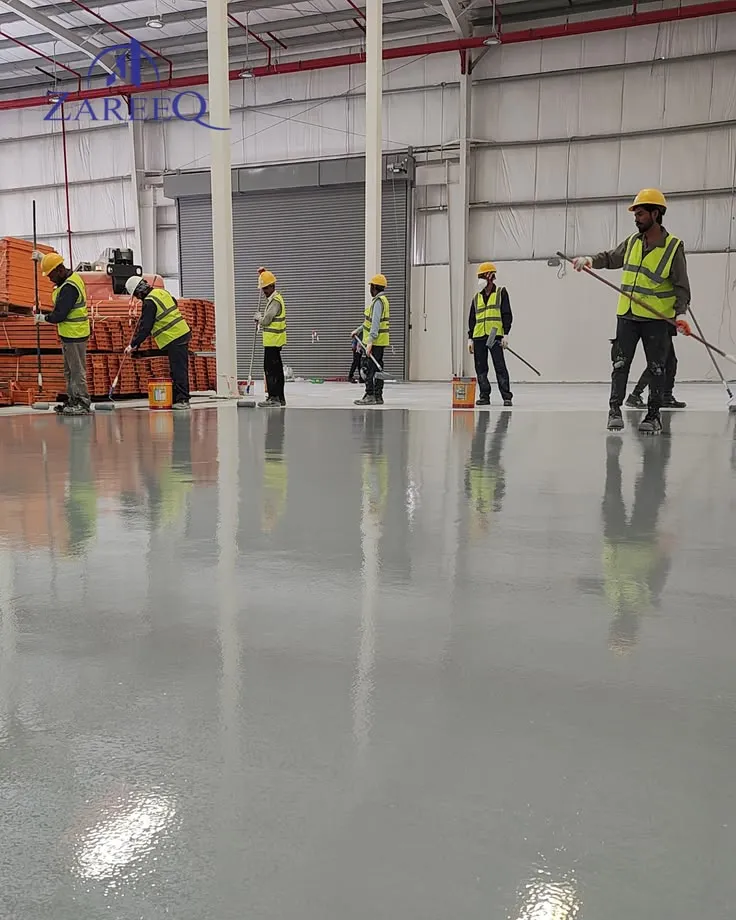
Facilities considering Warehouse Resin Flooring often need more than hardened concrete. A high-build resin system can create a continuous surface with greater control over color, gloss, texture, safety markings, and resistance to oils or other chemicals.
Warehouses with frequent forklift movement, pallet impacts, maintenance fluids, or strict housekeeping requirements may value these characteristics. Resin systems can also provide a more uniform appearance across areas containing repairs or older patches.
The extra protection should correspond with real operating demands.
Traffic Type Matters
Two warehouses with the same square footage can place very different stress on their floors. A records-storage building with limited vehicle movement is not equivalent to a distribution center operating multiple forklifts through every shift.
Turning points, rack ends, loading routes, steel-wheeled carts, and staging areas create concentrated wear. Where traffic is severe, managers may prefer a flooring build designed around abrasion and impact rather than simply surface hardening.
Traffic mapping can therefore be more useful than choosing a system by building size alone.
Chemical Exposure Can Decide the Issue
A densified concrete floor remains concrete, so it should not automatically be treated as a chemical-containment surface. Warehouses that handle oils, maintenance chemicals, battery-related materials, or other aggressive substances may require a resin system selected for those exposures.
An Epoxy Floor Company In Green Brook should be given a realistic list of chemicals used in the facility, not just a general description of the warehouse. This helps determine whether a resinous coating, specialty topcoat, or another system is justified.
Appearance and Markings Also Matter
Some facilities want a bright finished floor with clearly defined pedestrian lanes, forklift paths, staging areas, and restricted zones. Resin systems make it easier to create a uniform visual field and incorporate color-coded markings.
Other warehouses may prefer the natural appearance of densified concrete and have limited need for decorative finishes. The choice should support workflow and maintenance rather than follow a purely aesthetic preference.
Preparation Is Required Either Way
Neither approach eliminates the need to address the substrate. Weak concrete, failed patches, contamination, and damaged joints still require attention.
Mechanical preparation may be needed before a resinous system is installed, while densification also depends on clean, suitable concrete. Managers should compare the preparation scope in each proposal rather than looking only at the final product.
Consider Life-Cycle Maintenance
The best system is the one that fits how the warehouse will be maintained. Densified concrete may suit dry, low-chemical areas where simplicity and dust reduction are priorities. Resinous flooring may be more appropriate where operators need stronger chemical resistance, visual zoning, seamless cleanability, or a more robust protective build.
Maintenance teams should be involved because they understand which areas collect dust, tire marks, spills, or recurring damage.
Conclusion
Warehouse flooring does not need to follow a one-system-fits-all approach. Concrete densifiers and resinous coatings solve different problems, and each can be useful when matched to the right environment.
A practical decision begins with slab condition, traffic intensity, chemical exposure, appearance goals, safety markings, and maintenance expectations. By comparing these factors before specifying a finish, facility managers can choose a surface strategy that protects the concrete appropriately without adding unnecessary complexity or leaving demanding areas under-protected.