
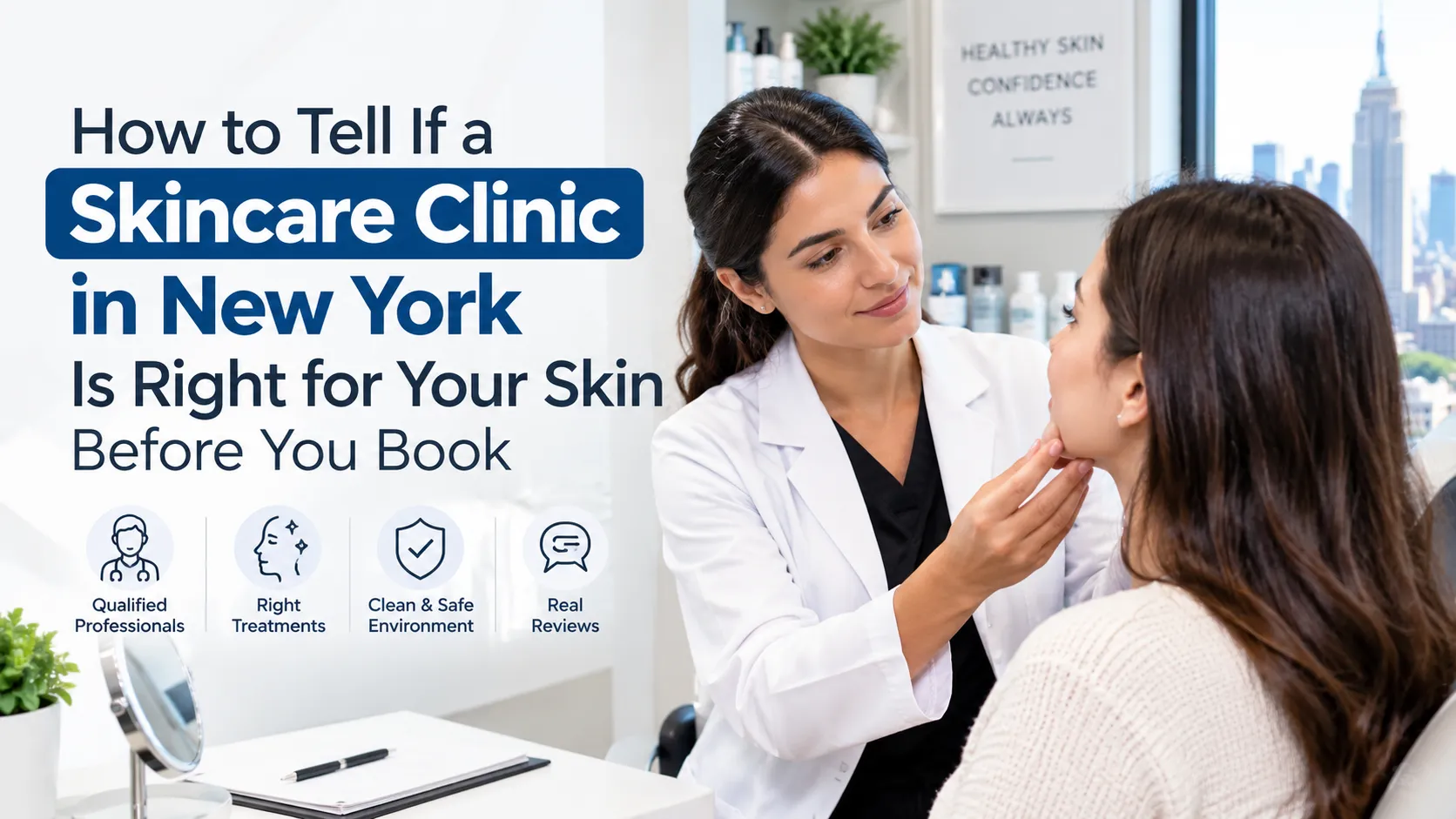
You read the reviews, browse before-and-afters, and shortlist clinics that look credible. Then you book. And somewhere between the consultation and the second session, you realize the treatment was never right for your skin. This is the most common mistake people make when choosing a skincare clinic New York — mistaking a polished brand for clinical fit. The decision you make before you book matters more than anything after. The consultation is not a formality. It is the most accurate diagnostic tool available, and most people never use it that way.
Most People Are Evaluating Clinics the Wrong Way
Reviews measure popularity. Instagram aesthetics measure marketing budgets. Neither tells you whether a clinic is equipped to treat your skin. In New York’s aesthetic market, the volume of well-branded, well-reviewed clinics creates a real selection problem: too much noise and too little clinical signal. A five-star average does not mean a clinic is right for your skin type and barrier health or treatment history.
The more useful question is not “Is this clinic good?” but “Is this clinic built for a patient like me?” A Google rating cannot answer that. Only observing how a clinic behaves before it has your money can — and that means the consultation.
What a Genuine Consultation Actually Looks Like
A real consultation is a clinical intake event, not a tour of the treatment menu. A clinic that opens with pricing, packages, or promotions is revealing how it operates before a single question about your skin has been asked.
The markers of a diagnostic consultation are specific. A good provider starts by learning what your skin has been through. They ask what you use now and which ingredients you are applying. They also check for things that could cause harm with your plan. Last, they talk about what results you can expect and how long it usually takes. If these parts are missing, the visit feels built for sales. It is less focused on your skin.
This is not rare. Many top skincare clinics in New York have industrialized their consultations to handle volume. The intake becomes scripted, the treatment recommendation templated, and the patient interchangeable. You can detect this in the first few minutes if you know what to look for.
The Intake Form Is the First Signal
Before the provider enters the room, the intake form has already told you something. A form asking only for your name, date of birth, and treatment interest is a volume indicator — the clinic is processing patients, not assessing them.
A clinic intake form looks at any bad reactions you had before. It also asks what active ingredients are in what you use now. You will note any sensitivities you already know about. The form requests what happened with past treatments. It also includes any skin or health details that may matter. That specificity is clinical infrastructure. A clinic investing in individualized intake has made a structural decision to treat patients as distinct cases, and that shapes everything that follows.
The Six Questions That Reveal a Clinic’s True Competency
Generic advice tells you to “ask questions.” It never explains what a strong answer reveals versus what deflection exposes. These six questions are built around diagnostic intent — designed to surface how a clinic thinks, not how it markets itself.
“How do you assess my skin type and barrier health before recommending a treatment?” A specific answer names an assessment method. A vague answer pivots to treatment benefits.
“Do you perform a patch test before chemical or device-based treatments?” The explanation matters more than the yes-or-no — it reveals clinical caution versus liability indifference.
“What contraindications would cause you to delay or decline treatment?” A booking-focused clinic deflects this. An outcome-focused clinic answers directly.
“Can you walk me through what happens if I react negatively?” This tests aftercare infrastructure. No clear answer means no real accountability.
“How many patients with my skin type have you treated with this specific protocol?” Certification is not the same as experience. This question separates the two.
“What would you recommend I do at home between sessions, and why?” A top skincare clinic in New York treating you as a long-term case answers this clinically. One optimizing for rebooking answers it in product terms.
Specificity is the signal. Deflection, pivoting to pricing, or vague reassurances are disqualifiers.
What to Do With the Answers You Get
Responses fall into three categories, each with a clear decision weight.
Specific and individualized: The provider referenced your intake, named your actual concerns, and grounded the recommendation in your biology. This is the standard a skincare clinic New York operating at a clinical level should meet.
Generalized but honest: The provider gave sound general answers without personalizing them to your case. This is a yellow flag — not an automatic disqualifier, but reason to ask a follow-up before committing.
Deflective or sales-forward: The provider moved toward pricing or urgency before completing a clinical picture of your skin. This is a hard disqualifier. A clinic that cannot give grounded answers during a consultation — when it is actively trying to earn your business — will not perform differently once it has your payment.
Why the Right Consultation Changes Your Skin Outcomes
Individualized pre-treatment assessment is not optional. In aesthetic dermatology, it reduces adverse events, improves treatment timelines, and raises long-term patient satisfaction. The evidence supports slowing down before committing.
In New York, where access to treatments is fast and frictionless, the consultation is the primary clinical differentiator. Any clinic can offer a HydraFacial. Far fewer will determine whether a HydraFacial is what your barrier actually needs right now. A clinic that asks more before it does more is operating with long-term outcomes as the actual goal — and that is what most patients in New York never find, because they stop evaluating the moment a clinic looks credible enough.
Your Skin Deserves a Clinic That Listens Before It Acts
At Rose Ella Skincare, every treatment begins with a detailed skin analysis — not a menu recommendation. This clinic is in Nanuet, New York. It focuses on care for skin that breaks out easily and gets irritated fast. Many clients have sensitive or reactive skin, and some have skin that feels compromised. Staff follow strict cleaning rules. They use products that are made to be gentle on skin. Each person gets a plan that a professional puts together. Rose Ella does not offer quick fixes or one-size-fits-all protocols. Each session is built around your skin’s actual condition and long-term correction goals — because lasting improvement starts with getting the assessment right.
Frequently Asked Questions
-
What specific questions should I ask during a skincare consultation to assess clinical competency?
Check how they figure out your skin type and whether your skin barrier looks healthy before they suggest anything. Ask what conditions or contraindications would make them hold off or cancel the session. Also ask how many people with your same skin type they have treated using that exact protocol. These questions require real clinical knowledge — deflection or vague reassurances are disqualifying.
-
How can I tell if a consultation has been scripted for sales rather than designed for my skin?
A sales-scripted consultation moves toward pricing and packages without collecting a complete skin history. A diagnostic one slows down — asking about prior reactions, active ingredients, sensitivities, and realistic timelines. If a provider recommends a treatment before asking substantive questions about your skin, the process has been optimized for conversion.
-
Is a free consultation at a skincare clinic useful, or is it just a booking funnel?
It depends on how the clinic structures it. A clinically useful consultation includes skin assessment, contraindication screening, and individualized treatment logic. A booking funnel leads immediately to a package offer. The intake form and the first five minutes of the conversation will tell you which one you are in.
-
How many sessions should a clinic recommend before I feel confident in their assessment?
A clinically grounded clinic will not quote a fixed session count without qualifying it first. Any provider who recommends a bundled package before completing a skin assessment is working from a sales script. A sound recommendation ties session frequency to your skin’s measurable response, adjusted as treatment progresses.