
Work doesn’t look the same anymore. And honestly, it’s not going back.
A few years ago, most tasks depended fully on people. Long hours, repetitive work, constant back-and-forth. Now things are shifting. Systems can handle patterns, speed through data, and take care of routine work. But that doesn’t mean humans are stepping out. It actually means the opposite.
You and these systems are starting to work together.
That’s where things get interesting.
What Does AI + Human Collaboration Really Mean?
Let’s keep it simple.
It’s not about replacing people. It’s about splitting the workload in a smarter way.
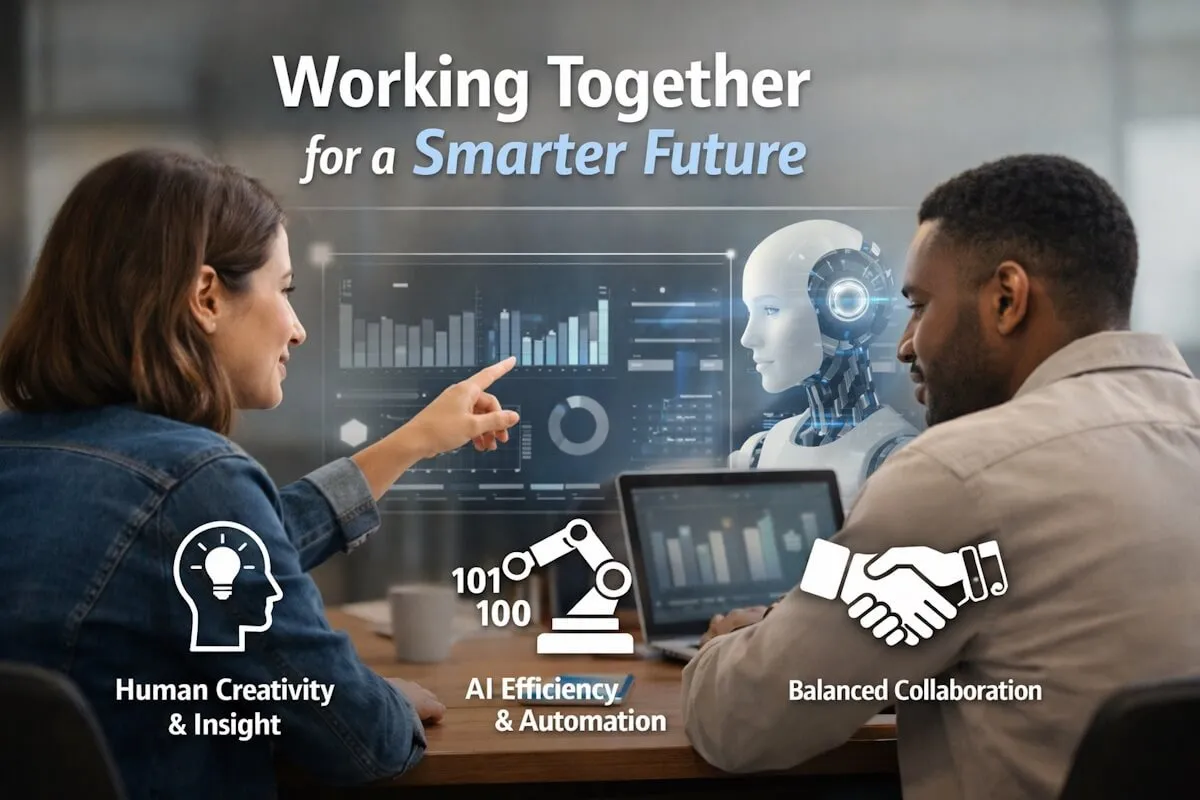
Machines handle tasks that are repetitive or data-heavy. You focus on judgment, creativity, and decision-making.
Think about it like this. You don’t want to spend hours sorting spreadsheets when something can do it in seconds. At the same time, you wouldn’t trust a system alone to decide your business strategy.
So the balance matters.
Companies offering AI Development Services are building tools that support this kind of teamwork. Not takeover. Not replacement. Support.
And that’s a big difference.
Why This Shift Is Happening Now
There’s a reason you’re hearing about this everywhere.
Businesses are under pressure to move faster. Customers expect quick responses. Teams are stretched thin.
At the same time, tools have become easier to use. You don’t need a full technical team just to get started.
Here’s what’s driving this shift:
-
Growing data that needs quick handling
-
Demand for faster decision-making
-
Rising operational costs
-
Shortage of skilled professionals in certain areas
So companies are looking for ways to do more without burning out their teams.
That’s where collaboration between humans and systems comes in.
Where Humans Still Lead
Let’s be clear. There are things machines just can’t do well.
You bring context. You understand emotions. You deal with uncertainty.
Here are areas where your role stays critical:
1. Decision Making
Data can guide decisions, but it doesn’t understand consequences the way you do.
You look at risks. You think about long-term impact. You consider people.
That’s not something you can automate fully.
2. Creativity
Ideas don’t come from patterns alone.
You connect dots in unexpected ways. You create something new from scratch. That spark still belongs to humans.
3. Relationship Building
Business runs on trust.
Whether it’s clients, partners, or your own team, relationships need empathy. That human touch can’t be replaced.
Where AI Supports You
Now let’s flip the side.
There are areas where systems clearly do better.
1. Repetitive Tasks
Data entry. Basic analysis. Report generation.
These are time-consuming but predictable tasks. Perfect for automation.
2. Data Processing
You can’t manually go through thousands of data points quickly. Systems can.
They spot patterns, trends, and anomalies in seconds.
3. 24/7 Operations
Unlike humans, systems don’t need breaks.
This helps businesses stay responsive around the clock without exhausting their teams.
Real-World Examples of Collaboration
This isn’t just theory. It’s already happening across industries.
Customer Support
Support teams use smart tools to handle common queries.
You step in when the situation gets complex or emotional.
Result? Faster response times without losing the human touch.
Healthcare
Doctors use systems to analyze medical data and suggest possible diagnoses.
But the final call still comes from the doctor.
Marketing
Teams use tools to analyze campaign performance and audience behavior.
You decide what direction to take next.
What This Means for Your Business
If you’re running a business or leading a team, this shift affects you directly.
You don’t need to replace your workforce. You need to support it better.
Here’s what you should think about:
Are your teams spending time on repetitive work?
If yes, that’s your first opportunity.
Are decisions taking too long because of data overload?
You might need better support systems.
Are you struggling to scale operations?
Collaboration can help you grow without overloading your team.
This is where many companies start looking to Hire AI Developers who can build solutions tailored to their workflow.
Not generic tools. Not one-size-fits-all.
Something that actually fits how your team works.
Challenges You Should Be Aware Of
This shift sounds great, but it’s not always smooth.
Let’s talk about the real challenges.
1. Resistance to Change
People worry about losing their jobs.
That fear is real. You need to address it clearly.
Show your team how these tools will help them, not replace them.
2. Skill Gaps
Not everyone knows how to work alongside new tools.
Training becomes important.
You can’t just introduce a system and expect instant results.
3. Over-Reliance
Relying too much on systems can be risky.
You still need human oversight. Always.
Balance matters.
How to Build a Collaborative Work Environment
So how do you actually make this work?
Here are some practical steps.
Start Small
Don’t try to change everything at once.
Pick one area where automation can help. Test it. Learn from it.
Involve Your Team
Don’t make decisions in isolation.
Ask your team where they need support. They know their workflow better than anyone.
Focus on Training
Give your team the skills they need.
Simple onboarding can make a huge difference.
Choose the Right Partner
Not all tools are built the same.
Work with companies that understand your business and can build solutions around it.
That’s where reliable AI Development Services come into play again. The right partner doesn’t just deliver a tool. They help you make it useful.
The Future of Work Feels More Balanced
Here’s the thing.
This isn’t about humans versus machines.
It’s about humans with machines.
You take care of thinking, creating, and deciding. Systems handle speed, scale, and repetition.
That combination is powerful.
And honestly, it makes work a bit more manageable too.
Less burnout. More focus. Better results.
Sounds like a win, right?
Where Do You Go From Here?
If you’re still thinking about whether this applies to you, ask yourself one simple question.
What tasks are slowing you down right now?
Start there.
You don’t need a full overhaul. Just one step in the right direction.
And once you see the impact, you’ll know what to do next.
Because this shift isn’t coming in the future.
It’s already here.